Coin
10 Para - Mihailo Obrenović III (1868) — Serbia
Serbia • 1868 • KM#3
Overview
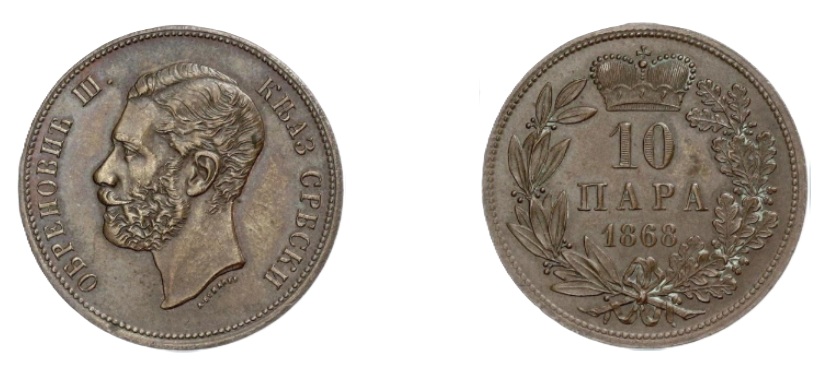
Standard circulation coin from Serbia featuring Prince Michael III Obrenović
Specifications
- Country
- Serbia
- Year
- 1868
- Composition
- Bronze
- Weight
- 10 g
- Diameter
- 30 mm
- Shape
- Round
- Technique
- Milled
- References
- KM#3
- Issuer
- Serbia
Design details
Obverse
Obrenović III facing left
Reverse
Denomination and date within wreath, crown above
Collector insights
- Design heritage: Anton Scharff is credited as the designer for the Standard circulation coins series. Designer attribution helps distinguish this issue from later restrikes or unofficial copies that reuse only the motif.
- Mintage vs. survival: Reported mintage of 6,590,000 is high, but circulation attrition, currency-reform meltdowns, and low collector-preservation rates mean uncirculated (MS-63+) examples are meaningfully scarcer than the raw figure suggests. Check third-party population reports (PCGS/NGC) for realistic survival in top grades.
- Catalogue reference: Listed as
KM#3. Use this reference code when cross-checking auction archives, dealer inventories, and standard printed catalogues.
Curator Insights
Historical context
These bronze coins represent the first modern national coinage of Serbia, issued to replace the chaotic mix of foreign currencies circulating within the Ottoman-influenced territory. Prince Mihailo Obrenović III prioritized the establishment of a state currency system as part of a broader drive for complete independence. This specific 1868 issue was the final coinage struck during his reign, as he was assassinated in Belgrade just as the pieces were entering circulation.
Design heritage
The obverse features the left-facing portrait of Prince Mihailo Obrenović III, executed by the prominent Austrian engraver Anton Scharff, who was a leading figure at the Vienna Mint. The reverse displays the denomination and date centered within a symbolic wreath of laurel and oak leaves, surmounted by the Serbian royal crown. Scharff's work on this series is noted for its high neoclassical precision, characteristic of 19th-century European state minting.
Varieties and technical notes
The 10 Para is struck with a plain edge and lacks a specific mint mark, though historical data confirms the production occurred in Vienna. Collectors often examine the alignment of the crown on the reverse relative to the laurel wreath to identify minor die rotations. Because this was a one-year type under a specific monarch, attention should be paid to the sharpness of the hair details on the obverse to distinguish between different stages of die wear.
Survival and modern availability
Of the 6,590,000 pieces minted, a significant number remained in circulation through several subsequent reigns and regional conflicts, leading to widespread wear. High-grade examples are relatively scarce as they were frequently retired or lost during the transition to the silver Dinar system and subsequent wars in the Balkans. Despite being over 150 years old, the bronze holds up well, though oxidation and carbon spotting are common among surviving technical specimens.
Related pieces
Explore more
Browse more items in the full catalog or view Serbia in the country guide.